

At about 10am on the last day of the 78th Cannes film festival, it looked as if the event had come to a premature (and spectacular) conclusion. A huge electrical blackout across the city and surrounding area – reportedly the result of sabotage – caused shops and restaurants to shut their doors. Those that remained open traded only in cash, a commodity that was no longer available from ATMs. Traffic lights failed. Screenings at the Palais des Festival paused for about 15 minutes, before the complex’s generator kicked in. The many screenings in satellite cinemas remained suspended.
Yet, about nine hours later, the stars were back on the red carpet for the closing ceremony and the presentation of awards. This year’s Palme d’Or, the festival’s top prize, went to Jafar Panahi for his political thriller It Was Just an Accident. It was an enormously popular result for the best-reviewed film of the festival. The crowd rose in genuine exultation for a film-maker who has long fought against censorship and prosecution in his native Iran. In 2010, charged with “propaganda against the government”, he was sentenced to six years in prison and a 20-year ban on directing. At that year’s Cannes, Juliette Binoche, who headed the current jury, brandished a placard with his name as she won best actor.
“Let us set aside all differences and problems,” Panahi said after accepting the top award from Cate Blanchett. “What’s most important now is our country and the freedom of our country. Let us join forces. No one should dare tell us what kind of clothes we should wear – or what we should do or what we should not do.”
Panahi has persevered and, this year, delivered a simple, but gripping, film about a group of former Iranian detainees who, almost by accident, end up kidnapping their former torturer. Screening late in the event, it delivered taut action and complex dialectics.
The Grand Prix, essentially the second prize, went to Joachim Trier’s lavish Sentimental Value. Stellan Skarsgård, Renate Reinsve and Elle Fanning star in a drama about an ageing film director who tries to cast his daughter in a project that dives into sensitive family secrets.
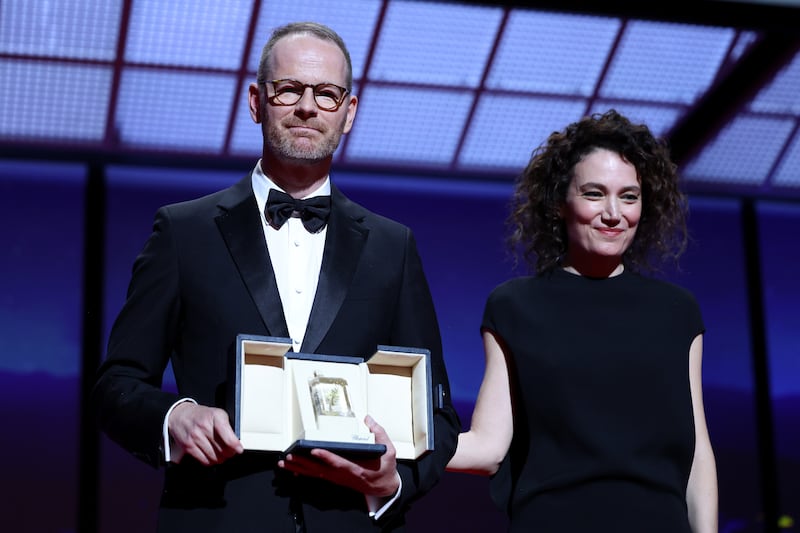
“Cannes holds a special place in my heart,” the Norwegian director said from the stage. “My grandfather Erik Løchen was here with his film in 1960 called The Hunt. He was a resistance fighter during the second World War in Norway during the occupation and was captured. And I think his way of trying to survive after the war was to play jazz music and to make movies.”
Critics viewed the 2025 competition as consistently strong, but, perhaps, less studded with noisy successes such as last year’s Anora, winner of both the Palme d’Or and the best picture Oscar.
Newcomer Nadia Mellit beat out Jennifer Lawrence’s bravura, scenery-munching performance in Die My Love to take best actress for the French drama The Little Sister. “Thank you, mummy, because I know you’re looking at me this evening,” she said. “You’re watching and I hope that you’re very proud and happy.”
Cannes tends to spread the love in its awards. The Brazilian director Kleber Mendonça Filho can, therefore, feel rightly proud to see his complex thriller The Secret Agent scoring twice. Mendonça Filho won best director, and Wagner Moura took best actor for playing a victim of state corruption in Brazil of the 1970s. Jean-Pierre and Luc Dardenne, veteran Belgian realists, won best screenplay for their characteristically gritty film Young Mothers.
There was less Irish interest at the event than in 2024, but Element Pictures, the Dublin-based production company behind Oscar-winning films such as Room and Poor Things, can boast a breakout title in Harry Lighton’s Pillion. The comic drama, story of a shy young man’s eye-popping introduction to life as “submissive” in a gay biker gang, secured rave reviews and took the award for best screenplay in the Un Certain Regard section.
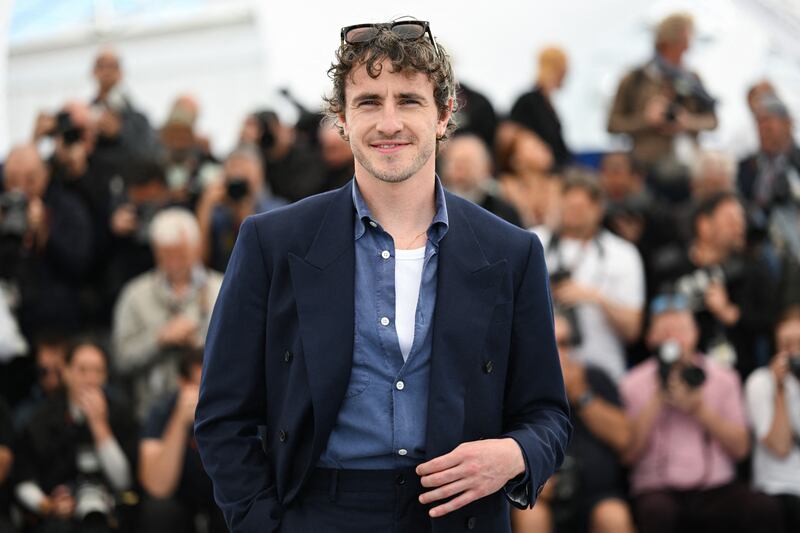
In the main competition, Oliver Hermanus’s The History of Sound, starring Paul Mescal as a folk music archivist, gathered no more than polite notices from critics. Akinola Davies jnr‘s My Father’s Shadow, also an Element Pictures production, received a special mention from the Camera d’Or jury for first features.
As the day progressed, plots thickened around the massive power outage, which did not end until about 5pm. Franceinfo, a French radio network, reported that police and the ministry of interior believed foul play was suspected in the downing of pylons near the towns of Villeneuve-Loubet, Mougins and Cagnes-sur-Mer.
“All resources are being mobilised to identify, track down, arrest and bring to justice the perpetrators of these acts,” Laurent Hottiaux, state representative for the Alpes-Maritimes region, said. Inevitably, given the location and the timing, speculation raged that the festival may have been the target.
WINNERS
Palme d’Or
It Was Just an Accident, directed by Jafar Panahi
Grand Prize
Sentimental Value, directed by Joachim Trier
Best Actress
Nadia Melliti, La Petite Dernière
Best Director
Kleber Mendonça Filho, The Secret Agent
Jury Prize – tie
Sirat, directed by Oliver Laxe
The Sound of Falling, directed by Mascha Schilinski
Best Screenplay
Jean-Pierre and Luc Dardenne, Young Mothers
Best Actor
Wagner Moura, The Secret Agent
Special Prize
Resurrection, directed by Bi Gan
Camera d’Or
The President’s Cake, directed by Hassan Hadi
Special Mention, Camera d’Or
My Father’s Shadow, directed by Akinola Davies Jr
Short Film Palme d’Or
I’m Glad You’re Dead Now, directed by Tawfeek Barhom


![[Web dev for beginners] CSS: Learn the essentials quickly](/image/r?src=templates/thedailycurrents.com/v8/images/categories/9.jpg&w=825&h=520&zc=1)
