

Indian Gaming Association (IGA) Executive Director Jason Giles said Wednesday that the possibility of a federal government shutdown won’t be good for gaming or Indian Country. On the latest episode of the New Normal webinar, Giles said that less government oversight could potentially create an opportunity for daily fantasy, prediction market, and sweepstakes operators, all of which currently operate in many jurisdictions without state oversight.
Giles said he believes the Trump Administration won’t seat new chairs for the National Indian Gaming Commission (NIGC) or the Commodity Futures Trading Commission (CFTC), which oversees prediction markets, until after the new year. So far, there is no nominee to head up the NIGC, and CFTC nominee Brian Quintenz has fallen out of favor, and new names are being bandied about.
The deadline for Congress to avoid a government shutdown is Oct. 1.
“With the shutdown, and the holidays, I don’t think we’ll see any movement until January or February,” Giles said. And that, according to Giles, means that non-state regulated platforms will have that much more time to become entrenched, perfect their products, and lobby lawmakers.
Giles’ co-host, Victor Rocha, conference chairman for IGA, pointed to sweepstakes and prediction market platforms as getting entrenched so “when the switch is flipped, you’re already part of it.”
But the strategy hasn’t worked, at least for sweepstakes operators in numerous states. In California, they’re facing expulsion after the state legislature this month passed AB 831, which would ban them. The bill is awaiting Gov. Gavin Newsom’s signature, though Rocha posited that Newsom may not sign the bill, but rather let a 30-day waiting period pass, at which point his “no action” would make the bill law.
“He wants to be president,” Rocha said of Newsom, “so he doesn’t want to [anger] the 18-35 demographic.”
There is no scenario where the sweepstakes gambling industry survives California. There is no veto. There is no deal to be made. Only the sweet release of death. Phase II is disgorgement. Bookmark this post. https://t.co/FDvyrMhEQ7
— Victor Rocha (@VictorRocha1) September 13, 2025
Giles: NIGC should take a stand
Wednesday’s conversation wove through the fate of sweepstakes and DFS as well as the future of prediction markets. Giles, who represents Indian Country on a host of issues, called out the NIGC and pointed to more critical issues than gaming that many tribes are concerned with.
The NIGC is 100% financed by tribes, but is a government agency.
The NIGC, which oversees enforcement for Indian gaming, has been without a chair since Sequoyah Simermeyer left for a position at FanDuel early in 2024. The agency finds itself in a similar situation to that of the CFTC, in that it is short-staffed. While the CFTC has been at the center of gaming conversation for months, the NIGC has been so quiet that Rocha called “the silence deafening.” The agency has not released any public statements with regard to DFS, prediction markets, or sweepstakes.
The biggest annual U.S. gambling conference, Global Gaming Expo (G2E), is set to begin in Las Vegas Oct. 6. Rocha’s tribal education track will include myriad panels discussing the future of gaming, and will have a focus on educating Indian Country about threats to exclusivity and sovereignty. Representatives from the NIGC are scheduled to sit on at least two panels, including one described as laying out “strategies to address emerging challenges in the gaming sector.” Giles said he’s hopeful NIGC representatives will take questions and engage with tribal leaders.
Gaming not the only issue for tribes
He went on, however, to point to other issues in Indian Country that trump Indian gaming. Under the Trump Administration, tribes have lost access to federal funds for everything from energy initiatives to educational opportunities.
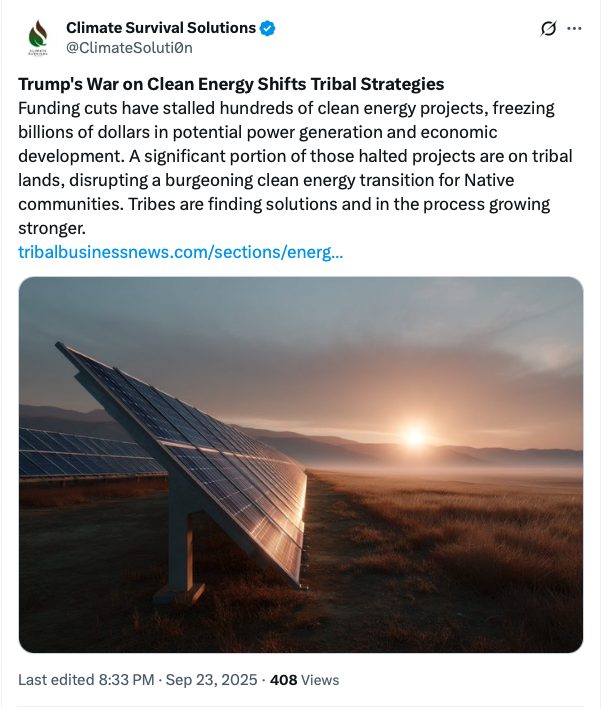
“When police forces are at risk of being reduced because DOJ pulled or clawed back funding, the CFTC thing is big, but when you have vital services taken away, that’s more important,” Giles said. “It’s a fraught time for tribes. Maybe our messaging to tribes should now be, ‘You’re sovereign’ and maybe now it’s time to go it alone. Relying on old models and agreements with governments [isn’t a plan], because the government doesn’t want to partner with you anymore. We’re not going to watch the money from the federal government dissipate without a fight.”
Giles went on to recount how tribes whose reservations were torn up during World War II because the U.S. needed natural resources from natural gas to uranium to fight haven’t forgotten the fallout. And they’ll continue to fight against the current administration’s appetite for natural resources. Many tribes saw cancer rates rise or were left with Superfund sites to deal with, he said.
‘Ratline’ from sweeps to prediction markets
But the country’s gaming tribes will continue to fight to preserve exclusivity and sovereignty, because it is gaming that brought them out of poverty. That fight, Rocha said, is now turning from sweepstakes platforms to prediction markets. He said sweepstakes operators were now “ratlining” to get in on prediction markets, which many stakeholders believe are exploiting an unusual political season to launch.
Tribal groups in California and Wisconsin have sued prediction market operator Kalshi in an effort to keep the platform off reservations. The Tribal Amici, which filed an amicus brief in the state of New Jersey’s case against Kalshi, filed another one Sept. 15 in the state of Nevada’s case against Crypto.com.
In the last 10 months, prediction markets have surged after Kalshi last fall won the right to offer contracts on the presidential election. Since then, it has added sports event contracts, and myriad companies, including Crypto.com, Polymarket, and PredictIt, have followed or plan to. In addition, several state-regulated sports betting operators have announced intentions to enter the prediction space.
Underdog was the first through a partnership with Crypto.com, while FanDuel announced on Aug. 20 a partnership with derivatives heavyweight CME. Underdog is a tech provider to Crypto.com, which is already live, while the FanDuel-CME platform has not launched yet. Neither currently offer sports event contracts.
Sovereignty ‘not on the chopping block’
There could be some clarity on how prediction markets will be regulated going forward early next week when the Securities Exchange Commission (SEC) and CFTC hold a joint roundtable to discuss “regulatory harmonization efforts.” The agenda and panelists — all representatives from the CFTC, SEC, and prediction markets — were released Wednesday. But Giles doesn’t expect the event to be anything more than a perfunctory get together.
— InGame (@InGameHQ) September 24, 2025Agenda, panelists for SEC-CFTC roundtable on regulatory harmonization efforts around prediction markets announced.
Will be held at the SEC's headquarters in Washington, D.C., from 1 p.m. to 5:30 p.m. on Sept. 29.
Will be streaming. pic.twitter.com/iBeJqAosFF
For Indian Country, prediction markets likely represent the biggest threat out there, as they are regulated by the federal government. The rise of prediction markets has essentially put two federal laws — the Commodities Exchange Act and Indian Gaming Regulatory Act — at odds. Courts will ultimately decide if one preempts the other, or if prediction markets are even entitled to offer sports event contracts. But until that happens, tribes see prediction markets as just another infringement on their rights.
“For those who are compacting, there’s a lot going on,” Giles said. “But what’s not on the chopping block is sovereignty.”


![[Web dev for beginners] CSS: Learn the essentials quickly](/image/r?src=templates/thedailycurrents.com/v8/images/categories/4.jpg&w=825&h=520&zc=1)